
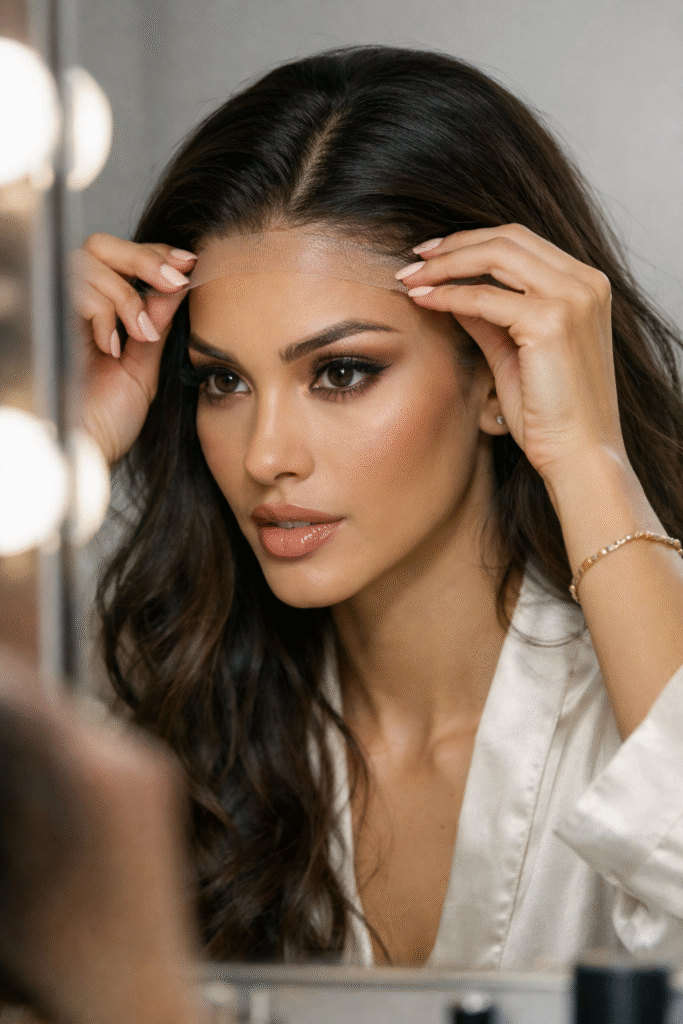
Full heads of “fake” hair have never looked more real. From red carpets to Instagram feeds, wigs are no longer just backstage beauty secrets — they’re front and center in pop culture conversations.
When a rising Hollywood star steps onto her first major red carpet, she expects questions about her outfit, skincare routine, and nerves. But lately, there’s a new one in rotation: Is that your real hair?
That’s exactly what happened to actress Odessa A’zion after she debuted her stunning corkscrew curls during a film premiere. Social media quickly began speculating whether the voluminous look was natural or a wig. The truth? Both. She wore a wig to one premiere and her real hair to another — proving just how seamless modern wigs can be.
The Internet’s Wig Obsession
Online beauty detectives have made wig-spotting a sport. A hairline that looks too perfect? Wig. A center part that’s too precise? Wig. Extra density at the roots? Probably a wig. Even dramatic color changes at events like the Met Gala are now assumed to be strategic wig swaps rather than bleach jobs.
Celebrity colorist Jenna Perry says clients frequently bring in “inspiration” photos that are, in fact, wigs. The challenge? Helping them understand that not every flawless hairstyle is achieved with dye and scissors. Sometimes, it’s custom lace and human hair craftsmanship.
From Taboo to Mainstream
While wigs have long been standard in film, television, and especially within the Black community, they were rarely discussed openly as a beauty tool. For years, wearing a wig carried stigma — often associated with hair loss or insecurity.
Even global icon Beyoncé once addressed the misconception that women who wear wigs don’t have healthy natural hair. In reality, many celebrities use wigs precisely to protect their real hair from heat, chemicals, and overstyling.
Historically, wigs have played a powerful role in beauty culture. At Bronner Bros. hair shows — influential events that began in the 1940s — theatrical wigs were celebrated as artistic expression. Later, stars like Lil’ Kim and Mary J. Blige used wigs and weaves to shape bold, transformative public images.
The 2010s embraced vibrant wig culture, with artists like Nicki Minaj, Lady Gaga, and Kylie Jenner showcasing colorful, campy styles. Today’s wig trend is different: less flashy, more natural — and nearly undetectable.
Celebrities Who Keep Us Guessing
Speculation swirls constantly around A-listers.
In 2024, Sabrina Carpenter playfully dodged questions about whether her signature bouncy blonde bangs were real or a wig. Actress Emma Stone wore a realistic auburn wig to conceal a shaved head for a film role — admitting she spent the entire night wondering if anyone could tell.
Even Cardi B turned wigs into courtroom fashion statements, appearing in multiple dramatically different styles during a legal case. Meanwhile, Nicole Kidman shocked fans with a pixie cut at the Met Gala, only to reappear days later with her signature long blonde hair — confirming she simply loves changing her look.
The takeaway? Wigs offer freedom.
Why Wigs Are Booming in 2026
Modern wigs come in countless options:
- Human hair or synthetic
- Lace-front or full lace
- Glueless or adhesive-based
- Full coverage or partial pieces
High-quality wigs are investments. Red-carpet styles typically range from $1,500 to $3,000. Fully customized, couture-level creations can exceed $15,000 — and sometimes much more, depending on hair origin, length, color rarity, and lace quality.
Much of the cost comes from sourcing premium human hair, especially “virgin” (untreated) hair from Eastern Europe or Southeast Asia. Rare natural blondes, reds, or grays command higher prices.
Then there’s construction. Expert wigmakers spend weeks crafting pieces tailored to a client’s head shape, skin tone, and desired hairline. With today’s 4K and 8K cameras capturing every detail, realism is non-negotiable.
Not Just for Celebrities
What’s changing most is accessibility. Wigs are no longer reserved for Hollywood or specific communities. Entrepreneurs, influencers, brides, and everyday professionals are embracing wigs for:
- Protective styling
- Time-saving convenience
- Color experimentation
- Volume enhancement
- Confidence boosts
Rather than signaling insecurity, wigs now represent control and creativity.
As celebrity hairstylist Lacy Redway has noted, hair is increasingly viewed as an accessory — no different from makeup, lashes, or designer handbags.
The Future of Wig Culture
Although many celebrities still avoid publicly confirming their wig use, the stigma is fading. Social media has demystified lace fronts, glue techniques, and custom units. Beauty transparency is growing — even if wigmakers don’t always receive the credit they deserve.
In 2026, the question isn’t “Is that a wig?” It’s “Why not?”
Because whether you’re protecting your natural hair, experimenting with bold styles, or simply saving time, wigs offer versatility without compromise.
And if someone asks whether it’s real?
It is. It’s really a wig.
